blog14

Want To Trade Forex Like An Expert? Control Your Risk

Want to step above the crowd? Knowing when to cut your losses and being consistent and disciplined about doing so can help you truly elevate your trading game.

Why Controlling Risk Is Key To Developing As A Trader

At first glance, this sounds rather obvious, doesn’t it? It may surprise you, but far too many traders lose more money than they can afford by sticking with bad trades in the hope that things will turn around for them. In reality, this rarely happens.

Smart traders, in contrast, set firm stopping points with their broker before ever opening their trades. If their losses drop below the level set, they understand that the best thing they can do is to walk away.  While this sounds easy enough to do, actually doing it consistently in real life can be quite hard. It’s basic human psychology to try to hold on to what we perceive as ours and to recoup losses. Fighting through that urge and learning to walk away will put you head and shoulders above many traders, however.

Top Tip: Planning Is Key

Have a plan about how and when to cut your losses and be disciplined and consistent about sticking to it. For example, determine what percentage of your equity can you afford to lose before making a trade and set a stop-loss order to ensure you don’t go beyond it.

Open Exness Demo Account

Open FXTm Demo Account

blog18

Want To Trade Forex Like An Expert? Plan Your Profits

Why Letting Profits Run Can Sometimes Pay Off

Just as many forex traders are too slow to cut their losses, many are also too quick to close their trades to claim their profits when a trade does go their way. Closing a trade too early prevents you from taking full advantage when, for example, a major market shift occurs in your favor. How do you avoid missing out? First, you can use an analytical tool like average true range (ATR) to predict periods of volatility in the market before they occur. How to recognize this? One sign can be periods of unusually low volatility. These often precede big swings up or down in the price of an item. When this is the case, you can use trailing stops, an automatic stop-out order you set with your broker where the limit follows the price upwards, or you can cash out only partially as your profits mount.


A trading plan is only as good as the strategy behind it — explore Popular Forex Trading Strategies to find one that suits your style.

Top Tip: Learning when to let profits run takes planning, time, and experience — but is well worth doing


Ready to put your plan into practice? Open a free Exness demo account and trade with discipline before risking real money.

Frequently Asked Questions

Q: What is a forex trading plan and why do I need one?

A trading plan is a written set of rules that defines your strategy, risk management, and goals. It tells you when to enter, when to exit, and how much to risk per trade. Without a plan, trading becomes gambling. Even experienced traders follow a strict plan to stay disciplined and consistent.

Q: What should a forex trading plan include?

A complete trading plan covers your trading strategy, the currency pairs you trade, your timeframe, risk per trade (typically 1-2% of account), entry and exit rules, and how you will review your performance. The simpler and clearer the plan, the easier it is to follow consistently.

Q: What is a trailing stop and how does it protect profits?

A trailing stop is an automatic order that follows the price upward as your trade moves in profit. If the price reverses by a set amount, the trade closes automatically — locking in your gains. It lets you ride a trend without having to watch the screen constantly.

Q: What is the Average True Range (ATR) indicator?

ATR measures market volatility by calculating the average price range over a set number of periods. Traders use it to set realistic stop loss and take profit levels based on actual market conditions rather than guessing.

Q: Why do expert traders close positions partially?

Partial closing allows you to lock in some profit while keeping part of the trade open to capture further gains. For example, closing 50% at the first target and letting the rest run with a trailing stop is a professional technique to maximize profits while managing risk.

Q: How do I start building a forex trading plan?

Start with one strategy, define your risk management rules, and test everything on a demo account before going live. Open your free Exness demo account here and build your plan with real market conditions and zero risk.


Tags:

AUD, Brexit, Brexit, Banks, CAD, CHF, CNH. currency hedging, CZK, Donald Trump, EU EUR, forex trading, GBP, Global, Growth, Fears, Gold Prices, Government Shutdown, HKD, Is forex trading profitable, JPY Leverage, Mean Reversion, MXN, NOK, NZD, Passive income, popular strategies, Risk Management, RUB, Safe, haven currencies, second referendum, SEK SGD, Silver, Price, technical indicators, trading account, Trading Basics, trading psychology, Trailing Stop, trump wall, TRY USD, USD Price, Chart, XAG, XAU, ZAR,

blog19

Bars, Lines, or Candlesticks? Reading Forex Charts Like a Pro

Are you struggling to find trading opportunities when you use fundamental analysis? News reports and eco releases can be strong influencers of market price, but sometimes they don’t give a clear enough indication of what to trade, and more investigation is called for. Time to check the forex charts!

Some traders use indicators to make sense of price history, while others prefer to “eyeball” the situation and make their own conclusions. Either way, it comes down to technical analysis and recognizing patterns in the price history, which brings us to the topic of this article. Which forex chart type reveals more? Should you use lines, bars, or candles? Here’s a simple breakdown of those options so you can start using the one that best suits your trading style.

Line charts

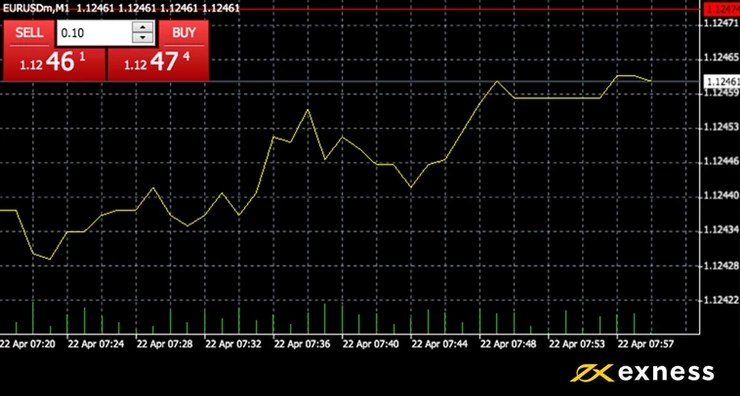
Right-click on an open forex chart and you’ll see three viewing options: lines, bars, and candlesticks. Lines display a currency pair’s price history in a much cleaner way. Lines track a simple straight line between the opening price and the closing price. Anything that happens between those two points will not be visible on a line chart. Since line charts don’t show the daily highs and lows, it makes them better suited to long-term analysis offering a wider simplistic overview. If you are planning to keep an order open for more than a week, then lines give a much cleaner picture from which to base forecasts. For short-term orders that present a risk of volatility, a bar chart is much more informative.


Bar charts

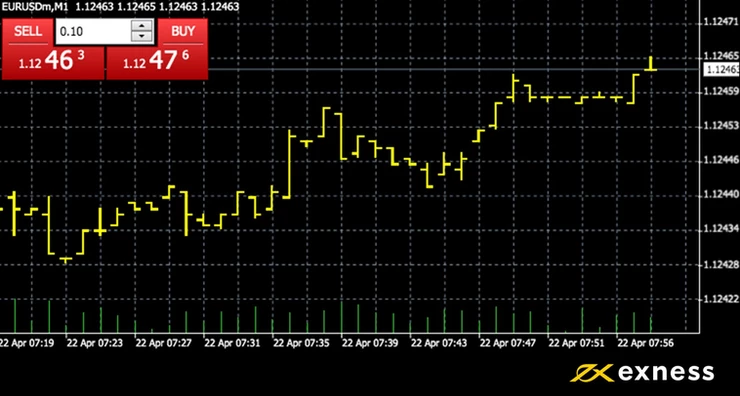
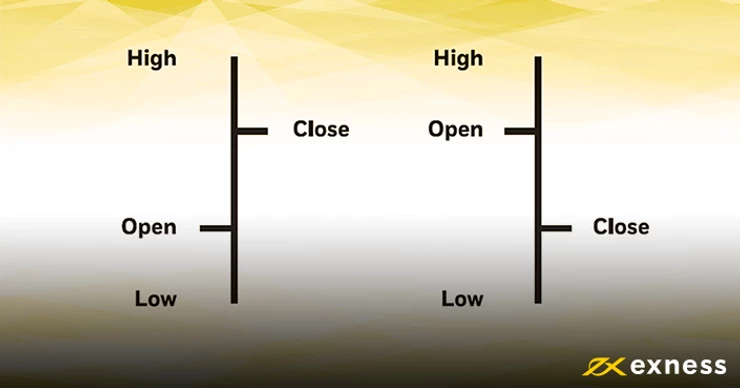
Like lines, bars also show the opening and closing prices, but bars display price highs and lows. The lowest and highest levels on each bar represent the lows and highs for the selected period. To the left of the bar is the opening price, to the right is the closing price

Most traders find bars harder to read than price lines, but there are certain advantages to using bars when performing technical analysis. When setting ‘Stop Loss’ (SL) and ‘Take Profit’ (TP), it can be useful to indicate just how extreme the lows and highs are compared to the closing prices. If the bars are long, but the opening and closing prices are crammed closer to the middle, it can mean that the selected period is experiencing price volatility. Extreme highs and lows tend to prematurely trigger a tight ‘SL’ or ‘TP’ order. If you’re opening a trade for the day, check the previous candlesticks to see if the wicks were far from the open and close? Set your ‘SL’ or ‘TP’ accordingly.


Candlestick charts

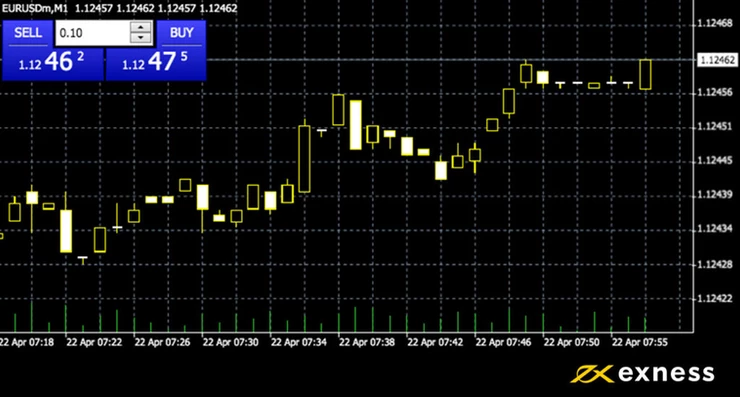
Candlesticks are probably the most popular way to view forex charts. This type of chart shows the same trading information as bars, but many traders prefer the style and insist that they are easier to read.Once you can read candlestick charts, the next step is learning momentum — see our guide on How to Use the RSI Indicator in Forex Trading.

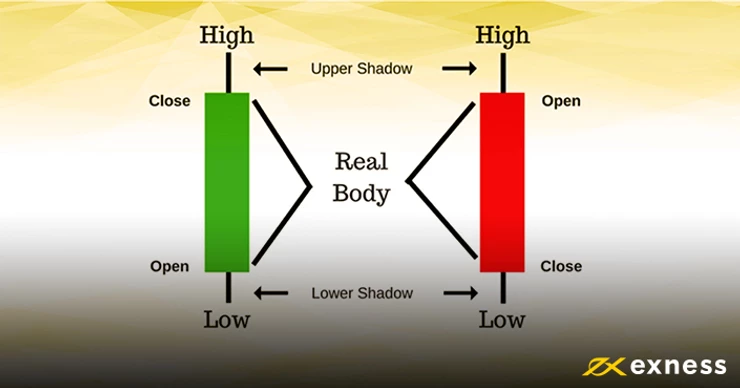
CSimilar to bars, the candlestick body shows the opening and closing prices, and the wicks that are sticking out of the top and/ or bottom represent the highs and lows of the selected period. The direction of the price for the period is shown by the color used. The most popular contrasts being green for a rise and red for a fall, but this is a completely customizable feature.

Just remember that the highs and lows never change, but the opening price on a candlestick switches place whenever the price direction changes. A rising trend opens on the bottom. A declining trend opens on the top. Candlesticks take a little getting used to, but when you do, there are dozens of patterns to watch out for that have a history of indicating rally moves or crashes.Chart reading becomes more powerful when combined with a strategy — explore Popular Forex Trading Strategies to put your skills into practice.


So which forex chart is better for forecasting?


Take a look at the three forex chart screenshots in this article. Which one seems the easiest to read or analyze? It’s really down to your own personal preference. Lines are great for a quick and easy overview, but they show much less when you’re looking at a one-minute timeframe. Consider using lines for long-term trading analysis or quick checks on how a fundamental release is affecting market prices. If you tend to open and close orders in the same day, candlesticks might be a better choice.Ready to apply what you’ve learned? Open a free Exness demo account and start practicing chart analysis with zero risk.


Test your analytical eye on the foreign exchange market


Open Exness Demo Account

Frequently Asked Questions

Q: What is the best chart type for forex trading beginners?
Candlestick
charts are the best starting point for beginners. They show open, close, high, and low prices for each period and make it easy to spot patterns and market sentiment at a glance.

Q: What is the difference between a bar chart and a candlestick chart?
Both
show the same price data (open, high, low, close), but candlestick charts use colored bodies that make it much easier to quickly identify bullish or bearish candles. Most professional traders prefer candlestick charts.

Q: Which timeframe should I use when reading forex charts?
It depends on
your trading style. Day traders typically use 5-minute to 1-hour charts. Swing traders prefer 4-hour or daily charts. Always check the higher timeframe first to understand the overall trend before going to a lower timeframe for entries.

Q: How do I identify a trend on a forex chart?
An uptrend consists of
higher highs and higher lows. A downtrend consists of lower highs and lower lows. Use the daily chart to identify the main trend before looking for entry signals on smaller timeframes.

Q: What indicators should I add to my forex chart?
Start simple — a 50 EMA
and 200 EMA for trend direction, and RSI for momentum. Avoid overloading your chart with too many indicators as this leads to confusion and conflicting signals.

Q: Where can I practice reading forex charts for free?
Open a free demo
account on Exness and use MT4 or MT5 to practice reading charts with real market data and no financial risk. Open your free Exness demo account here.


Tags:


AUD, Brexit, Brexit, Banks, CAD, CHF, CNH. currency hedging, CZK, Donald Trump, EU EUR, forex trading, GBP, Global, Growth, Fears, Gold Prices, Government Shutdown, HKD, Is forex trading profitable, JPY Leverage, Mean Reversion, MXN, NOK, NZD, Passive income, popular strategies, Risk Management, RUB, Safe, haven currencies, second referendum, SEK SGD, Silver, Price, technical indicators, trading account, Trading Basics, trading psychology, Trailing Stop, trump wall, TRY USD, USD Price, Chart, XAG, XAU, ZAR, indicator, Forex Millennium, Karl , golden rebate, rebate, cashback,




blog22-3

The Basics of Forex Theory An introduction to the Foreign Exchange, the Major Currencies and Reason

What is a Currency Pair ?

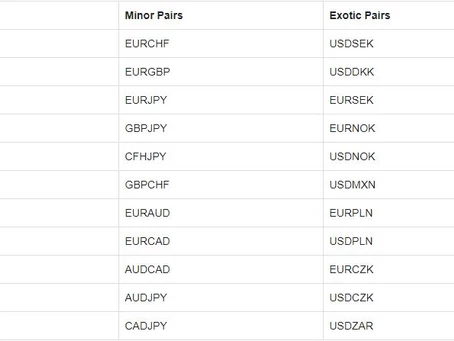
Currency is always measured against another currency and they are referred to as currency pairs. Currency pairs are generally segregated into groups. These groups are known as Majors, Minors and Exotics. Major currency pairs are generally the most popular traded currency pairs. Almost all currencies are free floated, meaning that they don’t have a set representation of value to another currency and can rise and fall in value independently. Some of currency pairs offered by Exness available for trading are:
Once you understand the basics, the next step is learning to read price movements — see our guide on Reading Forex Charts Like a Pro.


What is a Pip ?

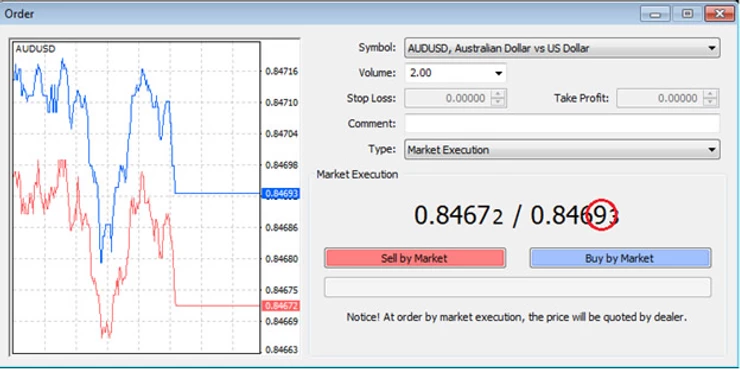
A pip is a small measurement of change in the underlying currency. Generally, it is the forth (0.0001) decimal place of a currency price, except with the Japanese Yen, where they have no denomination for cents in their currency (in the Japanese Yen, the pip is the second decimal place). Shown below is an image representing an order window reflecting the price of the AUD/USD Currency Pair

The fourth decimal place is circled red to show which decimal the pip is in reference to. If the price 0.84693 moves to 0.84683 then there was a 1 pip movement. Please note that the fifth decimal represents 1/10th of a pip.


A pip is a good reference measure to how much a trader can make based on the volume of their trades. For example, if a trader purchases a full contract the value of potential return and risk is $10 profit or loss (of the second named currency in a pair) per pip movement. You can follow the table below as a reference to potential risk or return:


Quite often, the annotation used to measure how well a trader is doing is to mention how many pips they have gained in a set time period.

What is Bid & Ask and Spread ?

With currency quotes, they are always represented with a Bid offer and an Ask offer. This denotes the price difference between buying and selling.

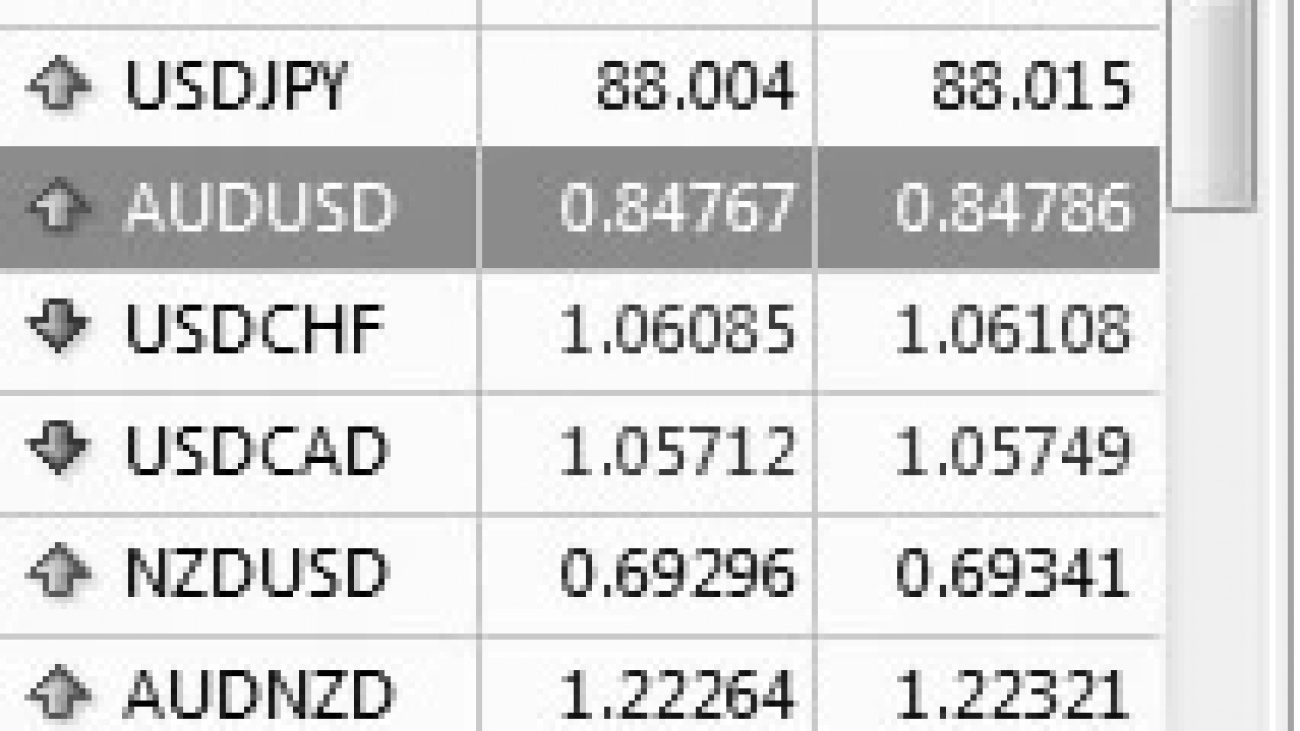
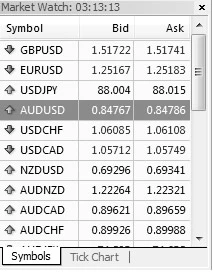
If you BUY, you are buying at the ASK price. if you SELL, you are selling at the BID price. Shown below is a list of currency pairs all showing a Bid and Ask offers.

Remember, if you opened a BUY position and you wish to close it, you are essentially selling it back, therefore the price you will be closing the position at is the BID price and vice versa.
To start applying technical analysis, learn how to use one of the most popular indicators in our article on How to Use the RSI Indicator in Forex Trading.

The spread is the pip difference between the BID and ASK. If you were to look at the above image and referred to the AUD/USD then you will notice the BID as 0.84767 and the ASK as 0.84786.

This is a spread of 1.9 pips. 0.84786 – 0.84767 = 0.00019 0.00019 = 1.9 pips

What is Leverage and How much do I need to trade ?

Leverage is the amount that you are borrowing based on the deposit in your account. Default leverage is set at 100:1, meaning that for every $1 you have in your account, you have a buying power of $100. If you have $1,000 in your account, you have buying power of $100,000. Something to remember is a full contract is $100,000 of the base currency. So if you were looking to trade a Full Lot of the EUR/USD, then you would need the equivalent of EUR$100,000 in your account to trade this. If you wanted to trade a full contact and you had a leverage of 500:1, then you could take this position with only $200 in your account ($200 x 500 = $100,000). High leverage can help you take larger positions based on smaller capital in your account, but it is not without its pit falls. Larger positions result in larger dollar movements per pip and as such can wipe out smaller capital amounts in a short period of time.
Ready to put theory into practice? Open a free Exness demo account and start trading with zero risk.


Frequently Asked Questions

Q: What is forex trading in simple terms?
Forex trading is the buying and selling of currencies in the global financial market. You profit by predicting whether one currency will rise or fall against another. For example, if you believe the Euro will strengthen against the US Dollar, you buy EUR/USD and sell when the price rises.

Q: What is a currency pair?
A currency pair is the price of one currency expressed in terms of another. In the pair EUR/USD, the Euro is the base currency and the US Dollar is the quote currency. The price shows how many US Dollars are needed to buy one Euro.

Q: What is a pip in forex?
A pip is the smallest unit of price movement in a currency pair. For most pairs, one pip equals 0.0001. If EUR/USD moves from 1.1000 to 1.1001, that is a one pip movement.

Q: What is leverage in forex trading?
Leverage allows you to control a large position with a small amount of capital. For example, with 1:100 leverage, you can control a $10,000 position with just $100. While leverage amplifies profits, it also increases risk significantly.

Q: What is the difference between fundamental and technical analysis?
Technical analysis uses price charts and indicators to predict future movements based on historical data. Fundamental analysis looks at economic news, interest rates, and geopolitical events to determine a currency’s value. Most professional traders use a combination of both.

Q: How do I start forex trading as a complete beginner?
Start by opening a free demo account, learn the basics of chart reading and risk management, and practice with virtual funds before risking real money. Open your free Exness demo account here.