blog12

Trading Strategy: Forget Price, Try Trading Volume

Are you ignoring the volume bars at the bottom of your price chart? It’s not unusual. Loads of traders prefer to track prices or

f

s when choosing a currency pair. At first glance, volume doesn’t seem to be the most powerful indicator, but there’s more to trading volume than meets the eye.


The volume section of your trading platform shows the total lots of the selected currency pair being bought or sold. For example, whenever heavyweight investors start opening huge trading contracts, trading volume quickly rises. Moreover, if the world’s media channels suddenly popularize a particular currency pair, trading volume tends to rise shortly after as thousands of traders open orders. In other words, trading volume is—among other things—a popularity meter. But how is that useful to you?

Volume and leverage

Before we even think about placing an order, we should first consider how volume relates to leverage. “Why leverage?” you may ask. What could volume and leverage have in common? Leverage is an important choice when you first go through the signup process. With Exness, you can open and manage multiple trading accounts from one convenient Personal Area. Each account can have a different leverage setting, which is very useful if you wish to trade both high volatility and low volatility pairs. The rule of leverage is simple and will give your trading strategy a solid foundation. low trading volume = low liquidity = high volatility = lower leverage

high trading volume = high liquidity = low volatility = higher leverage

A highly volatile currency pair could create huge profits when combined with high leverage, but such fragile orders tend to ‘Stop Out’ underfunded trading accounts in minutes when massive price fluctuations occur. Not recommended! Instead, try comparing the trading volumes of your favorite pairs with the major and minor currencies. If your pair is experiencing lower volume, then you might want to use a trading account with a lower leverage setting. Checking the volume of your preferred currency pairs could save you a lot of disappointment.

Strong price vs high price

Volume can be used to measure the ‘strength’ of a price shift, which answers a common question every trader asks themselves on a daily basis. “Is this price shift a coming reversal or just another bump in the road?”

Let’s consider a currency in a long-term downtrend. One day, the price begins to rise. Is this a breakout in the making, or just another fluctuation? A change in trend depends on many factors, but the first place to start checking is the trading volume. If the trading volume is low at the time of a price increase, then the market move is probably just a hiccup and the downtrend will return with a vengeance.

On the other hand, if the volume has been higher than usual, then you might be seeing the early stages of a price reversal. In a nutshell, low volume direction changes don’t stick. There are always exceptions to every trading strategy, but spotting a weak reversal is a very strong indicator.

How to test the trading strategy

Try opening up your trading platform and targeting a currency pair on the Market Watch list. Look back over the last few weeks until you find a significant fall in the trading volume, then check what happened to the price shortly after. Match your leverage to the average volume, then wait for the next possible breakout. If the price is reversing and the volume is rising, then the pair could be an attractive trading opportunity that deserves investigation or investment.


Open Exness Demo Account

Open FXTm Demo Account


blog19

Bars, Lines, or Candlesticks? Reading Forex Charts Like a Pro

Are you struggling to find trading opportunities when you use fundamental analysis? News reports and eco releases can be strong influencers of market price, but sometimes they don’t give a clear enough indication of what to trade, and more investigation is called for. Time to check the forex charts!

Some traders use indicators to make sense of price history, while others prefer to “eyeball” the situation and make their own conclusions. Either way, it comes down to technical analysis and recognizing patterns in the price history, which brings us to the topic of this article. Which forex chart type reveals more? Should you use lines, bars, or candles? Here’s a simple breakdown of those options so you can start using the one that best suits your trading style.

Line charts

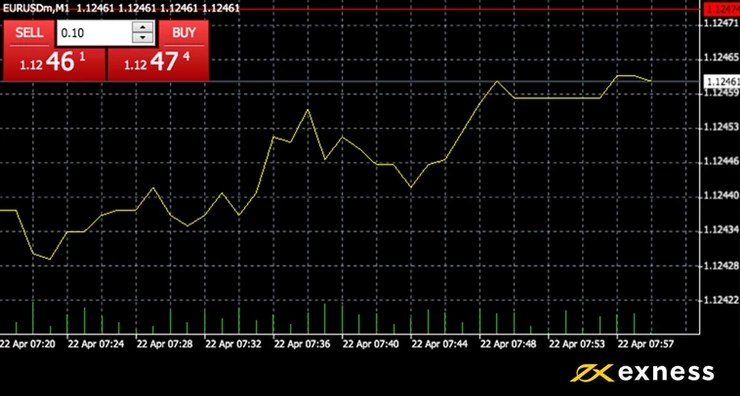
Right-click on an open forex chart and you’ll see three viewing options: lines, bars, and candlesticks. Lines display a currency pair’s price history in a much cleaner way. Lines track a simple straight line between the opening price and the closing price. Anything that happens between those two points will not be visible on a line chart. Since line charts don’t show the daily highs and lows, it makes them better suited to long-term analysis offering a wider simplistic overview. If you are planning to keep an order open for more than a week, then lines give a much cleaner picture from which to base forecasts. For short-term orders that present a risk of volatility, a bar chart is much more informative.


Bar charts

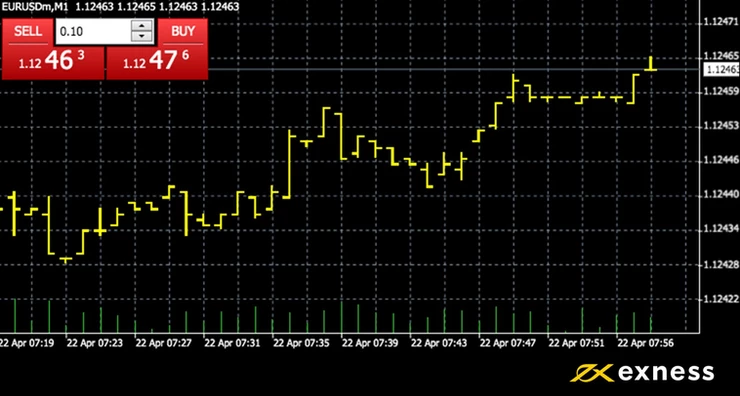
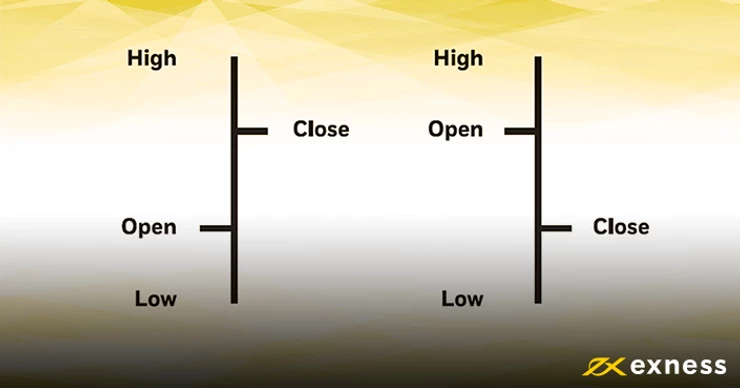
Like lines, bars also show the opening and closing prices, but bars display price highs and lows. The lowest and highest levels on each bar represent the lows and highs for the selected period. To the left of the bar is the opening price, to the right is the closing price

Most traders find bars harder to read than price lines, but there are certain advantages to using bars when performing technical analysis. When setting ‘Stop Loss’ (SL) and ‘Take Profit’ (TP), it can be useful to indicate just how extreme the lows and highs are compared to the closing prices. If the bars are long, but the opening and closing prices are crammed closer to the middle, it can mean that the selected period is experiencing price volatility. Extreme highs and lows tend to prematurely trigger a tight ‘SL’ or ‘TP’ order. If you’re opening a trade for the day, check the previous candlesticks to see if the wicks were far from the open and close? Set your ‘SL’ or ‘TP’ accordingly.


Candlestick charts

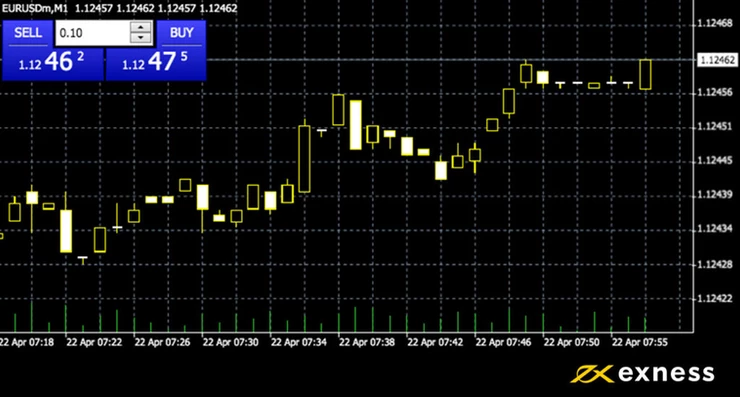
Candlesticks are probably the most popular way to view forex charts. This type of chart shows the same trading information as bars, but many traders prefer the style and insist that they are easier to read.Once you can read candlestick charts, the next step is learning momentum — see our guide on How to Use the RSI Indicator in Forex Trading.

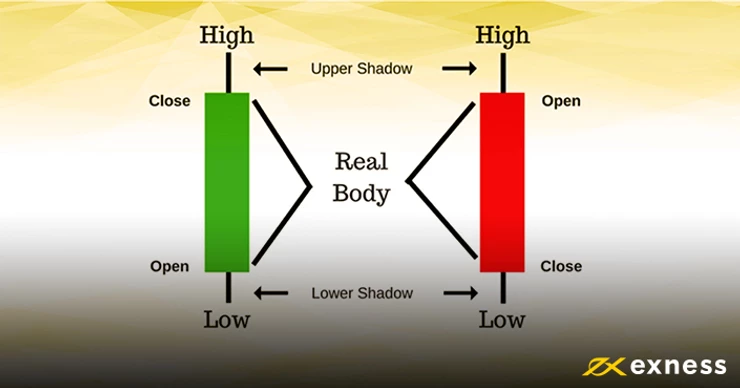
CSimilar to bars, the candlestick body shows the opening and closing prices, and the wicks that are sticking out of the top and/ or bottom represent the highs and lows of the selected period. The direction of the price for the period is shown by the color used. The most popular contrasts being green for a rise and red for a fall, but this is a completely customizable feature.

Just remember that the highs and lows never change, but the opening price on a candlestick switches place whenever the price direction changes. A rising trend opens on the bottom. A declining trend opens on the top. Candlesticks take a little getting used to, but when you do, there are dozens of patterns to watch out for that have a history of indicating rally moves or crashes.Chart reading becomes more powerful when combined with a strategy — explore Popular Forex Trading Strategies to put your skills into practice.


So which forex chart is better for forecasting?


Take a look at the three forex chart screenshots in this article. Which one seems the easiest to read or analyze? It’s really down to your own personal preference. Lines are great for a quick and easy overview, but they show much less when you’re looking at a one-minute timeframe. Consider using lines for long-term trading analysis or quick checks on how a fundamental release is affecting market prices. If you tend to open and close orders in the same day, candlesticks might be a better choice.Ready to apply what you’ve learned? Open a free Exness demo account and start practicing chart analysis with zero risk.


Test your analytical eye on the foreign exchange market


Open Exness Demo Account

Frequently Asked Questions

Q: What is the best chart type for forex trading beginners?
Candlestick
charts are the best starting point for beginners. They show open, close, high, and low prices for each period and make it easy to spot patterns and market sentiment at a glance.

Q: What is the difference between a bar chart and a candlestick chart?
Both
show the same price data (open, high, low, close), but candlestick charts use colored bodies that make it much easier to quickly identify bullish or bearish candles. Most professional traders prefer candlestick charts.

Q: Which timeframe should I use when reading forex charts?
It depends on
your trading style. Day traders typically use 5-minute to 1-hour charts. Swing traders prefer 4-hour or daily charts. Always check the higher timeframe first to understand the overall trend before going to a lower timeframe for entries.

Q: How do I identify a trend on a forex chart?
An uptrend consists of
higher highs and higher lows. A downtrend consists of lower highs and lower lows. Use the daily chart to identify the main trend before looking for entry signals on smaller timeframes.

Q: What indicators should I add to my forex chart?
Start simple — a 50 EMA
and 200 EMA for trend direction, and RSI for momentum. Avoid overloading your chart with too many indicators as this leads to confusion and conflicting signals.

Q: Where can I practice reading forex charts for free?
Open a free demo
account on Exness and use MT4 or MT5 to practice reading charts with real market data and no financial risk. Open your free Exness demo account here.


Tags:


AUD, Brexit, Brexit, Banks, CAD, CHF, CNH. currency hedging, CZK, Donald Trump, EU EUR, forex trading, GBP, Global, Growth, Fears, Gold Prices, Government Shutdown, HKD, Is forex trading profitable, JPY Leverage, Mean Reversion, MXN, NOK, NZD, Passive income, popular strategies, Risk Management, RUB, Safe, haven currencies, second referendum, SEK SGD, Silver, Price, technical indicators, trading account, Trading Basics, trading psychology, Trailing Stop, trump wall, TRY USD, USD Price, Chart, XAG, XAU, ZAR, indicator, Forex Millennium, Karl , golden rebate, rebate, cashback,