blog22-3

The Basics of Forex Theory An introduction to the Foreign Exchange, the Major Currencies and Reason

What is a Currency Pair ?

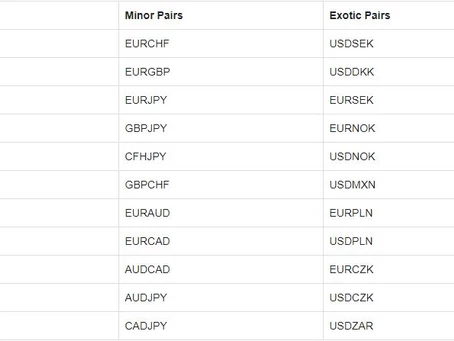
Currency is always measured against another currency and they are referred to as currency pairs. Currency pairs are generally segregated into groups. These groups are known as Majors, Minors and Exotics. Major currency pairs are generally the most popular traded currency pairs. Almost all currencies are free floated, meaning that they don’t have a set representation of value to another currency and can rise and fall in value independently. Some of currency pairs offered by Exness available for trading are:
Once you understand the basics, the next step is learning to read price movements — see our guide on Reading Forex Charts Like a Pro.


What is a Pip ?

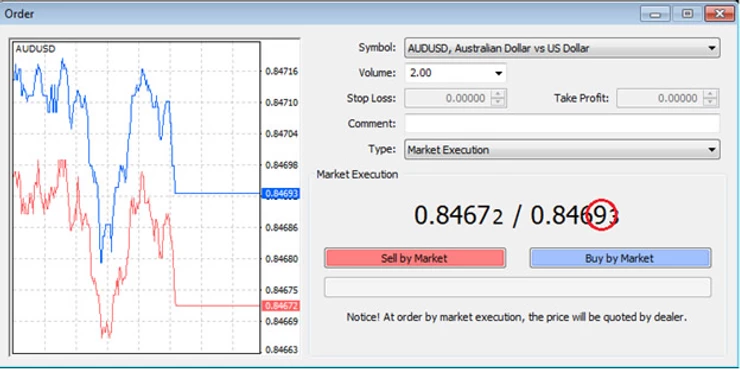
A pip is a small measurement of change in the underlying currency. Generally, it is the forth (0.0001) decimal place of a currency price, except with the Japanese Yen, where they have no denomination for cents in their currency (in the Japanese Yen, the pip is the second decimal place). Shown below is an image representing an order window reflecting the price of the AUD/USD Currency Pair

The fourth decimal place is circled red to show which decimal the pip is in reference to. If the price 0.84693 moves to 0.84683 then there was a 1 pip movement. Please note that the fifth decimal represents 1/10th of a pip.


A pip is a good reference measure to how much a trader can make based on the volume of their trades. For example, if a trader purchases a full contract the value of potential return and risk is $10 profit or loss (of the second named currency in a pair) per pip movement. You can follow the table below as a reference to potential risk or return:


Quite often, the annotation used to measure how well a trader is doing is to mention how many pips they have gained in a set time period.

What is Bid & Ask and Spread ?

With currency quotes, they are always represented with a Bid offer and an Ask offer. This denotes the price difference between buying and selling.

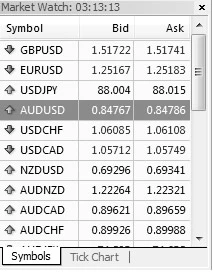
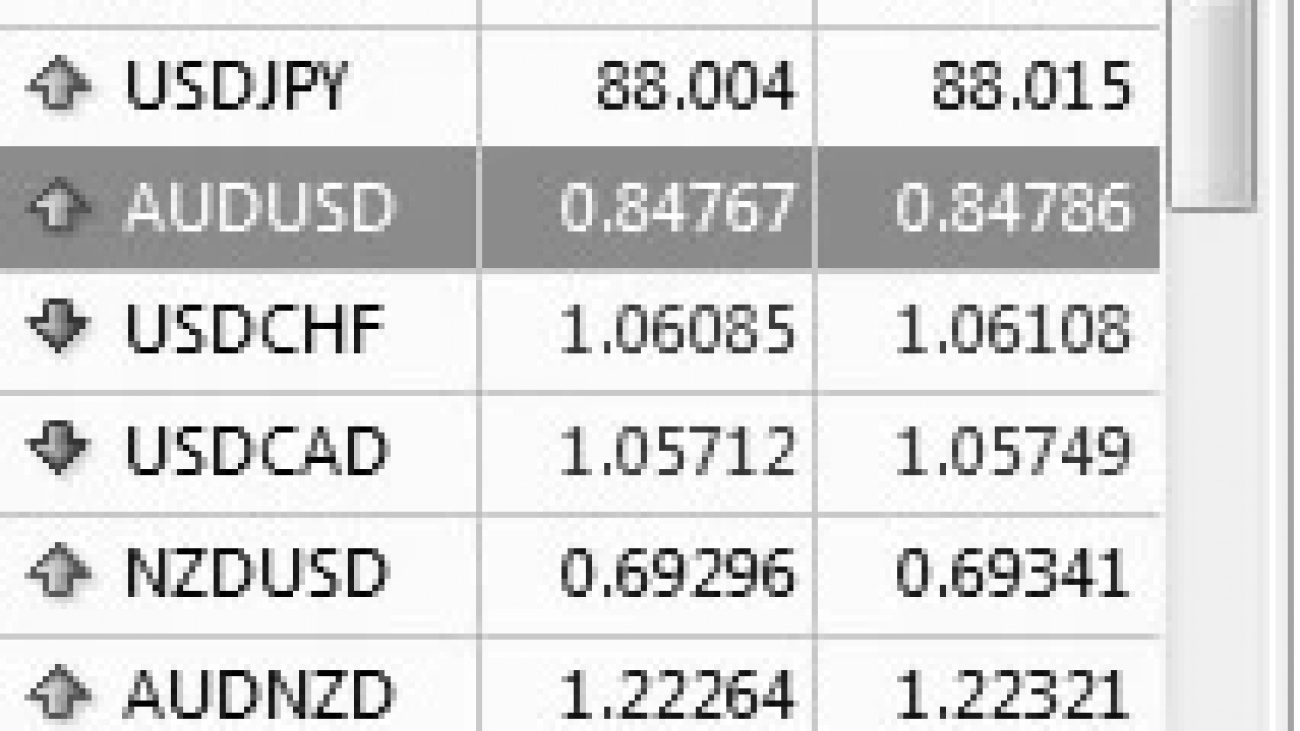
If you BUY, you are buying at the ASK price. if you SELL, you are selling at the BID price. Shown below is a list of currency pairs all showing a Bid and Ask offers.

Remember, if you opened a BUY position and you wish to close it, you are essentially selling it back, therefore the price you will be closing the position at is the BID price and vice versa.
To start applying technical analysis, learn how to use one of the most popular indicators in our article on How to Use the RSI Indicator in Forex Trading.

The spread is the pip difference between the BID and ASK. If you were to look at the above image and referred to the AUD/USD then you will notice the BID as 0.84767 and the ASK as 0.84786.

This is a spread of 1.9 pips. 0.84786 – 0.84767 = 0.00019 0.00019 = 1.9 pips

What is Leverage and How much do I need to trade ?

Leverage is the amount that you are borrowing based on the deposit in your account. Default leverage is set at 100:1, meaning that for every $1 you have in your account, you have a buying power of $100. If you have $1,000 in your account, you have buying power of $100,000. Something to remember is a full contract is $100,000 of the base currency. So if you were looking to trade a Full Lot of the EUR/USD, then you would need the equivalent of EUR$100,000 in your account to trade this. If you wanted to trade a full contact and you had a leverage of 500:1, then you could take this position with only $200 in your account ($200 x 500 = $100,000). High leverage can help you take larger positions based on smaller capital in your account, but it is not without its pit falls. Larger positions result in larger dollar movements per pip and as such can wipe out smaller capital amounts in a short period of time.
Ready to put theory into practice? Open a free Exness demo account and start trading with zero risk.


Frequently Asked Questions

Q: What is forex trading in simple terms?
Forex trading is the buying and selling of currencies in the global financial market. You profit by predicting whether one currency will rise or fall against another. For example, if you believe the Euro will strengthen against the US Dollar, you buy EUR/USD and sell when the price rises.

Q: What is a currency pair?
A currency pair is the price of one currency expressed in terms of another. In the pair EUR/USD, the Euro is the base currency and the US Dollar is the quote currency. The price shows how many US Dollars are needed to buy one Euro.

Q: What is a pip in forex?
A pip is the smallest unit of price movement in a currency pair. For most pairs, one pip equals 0.0001. If EUR/USD moves from 1.1000 to 1.1001, that is a one pip movement.

Q: What is leverage in forex trading?
Leverage allows you to control a large position with a small amount of capital. For example, with 1:100 leverage, you can control a $10,000 position with just $100. While leverage amplifies profits, it also increases risk significantly.

Q: What is the difference between fundamental and technical analysis?
Technical analysis uses price charts and indicators to predict future movements based on historical data. Fundamental analysis looks at economic news, interest rates, and geopolitical events to determine a currency’s value. Most professional traders use a combination of both.

Q: How do I start forex trading as a complete beginner?
Start by opening a free demo account, learn the basics of chart reading and risk management, and practice with virtual funds before risking real money. Open your free Exness demo account here.
blog21

Hedging vs Stop Loss

It’s not so hard to find an attractive currency pair to trade after spending an hour or two on your technical and fundamental analysis, but how can you protect your trading account from those unexpected and rapid crashes that happen from time to time?

It’s not so hard to find an attractive currency pair to trade after spending an hour or two on your technical and fundamental analysis, but how can you protect your trading account from those unexpected and rapid crashes that happen from time to time?

If you’ve been using Stop Loss, then there’s a chance that you may have missed a rally or two; as a result you may have ended up losing when you could potentially have seen some significant gains. Read on to discover whether there’s an alternative to Stop Loss that will ensure your orders don’t get closed prematurely, keeping you in with a chance to take full advantage of the next big rally. But first, let’s look at how Stop Loss actually works.

How Stop Loss works

If you’re trading a volatile currency, setting a Stop Loss just seems like the smart thing to do. After all, the forex market never sleeps, and anything can happen while you’re away from your trading platform. Stop Loss is a pending order, that will automatically activate when market conditions reach or match the level you specified, but this type of order has a weak point that many new traders discover the hard way.

Let’s use some simple numbers to explain the problem.

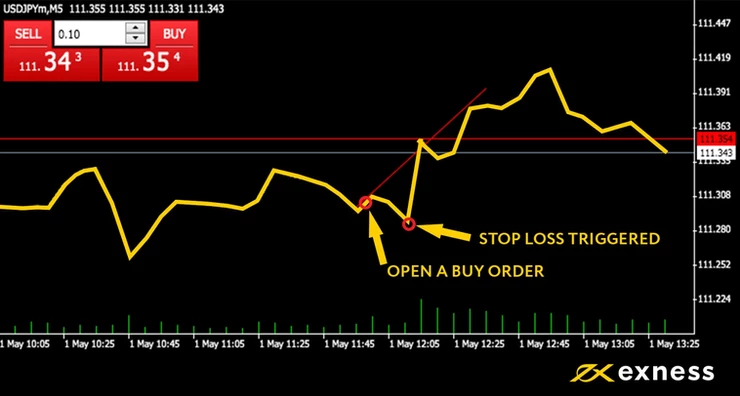
A USDJPY Buy order at 111.300

Take Profit at 111.400

Stop Loss at 111.280

If the price falls to 111.280, your Stop Loss will protect you from losing more money as it will automatically close your order. But what happens if the price bounces back up to 111.300 or above? Huge disappointment! Have you ever gone back to your trading platform to check your order after a few hours, saw that the price was on the rise, but then realised that your order had already been closed by a brief downward spike? Such price moves are often a source of frustration and complaint, especially with volatile pairs or during economic releases. Thankfully, there is an alternative to Stop Loss.

How hedging solves the problem

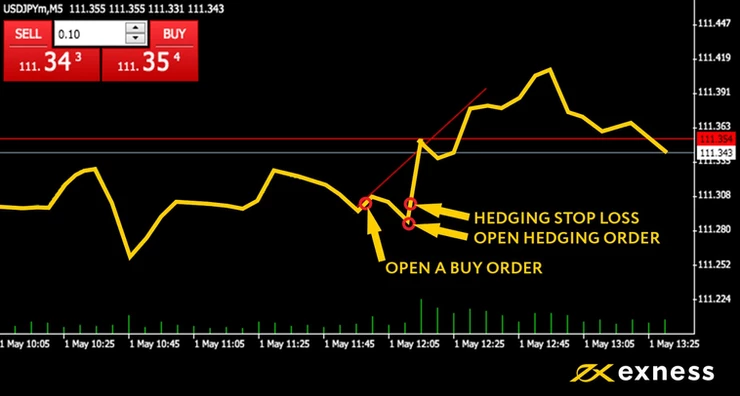
Consider setting a pending hedging order instead of a Stop Loss. Hedging also offers protection from huge losses, but it won’t close your order. Let’s use the same USDJPY order to see how a pending hedging order performs.

Buy order at 111.300

Take Profit at 111.500

Pending Sell order to activate if the price hits $111.280

If the price falls to $111.280, the hedging order activates. From that point, the hedging Sell order will offset any losses to the original Buy order. Your account will not suffer, no matter how low the price goes. And, your Buyorder is still active if a rally is just around the corner.

When to stop the hedging order

If the price goes down, bounces back, and eventually moves into a rally, then your Buy order will profit as you intended, but your hedging Sell order is losing now, and eating away at your Buy order profit. What can you do?

Consider setting a Stop Loss for your hedging Sell order at the entry point of the original Buy order. This way, when the rally kicks off, the hedging Sell order will be closed and you’ll enjoy all the benefits of the rally. You’ll take a slight loss from your hedging Sell order, but at least your Buy order remains active and ready to reap the rewards of the rally. Some might say a fair tradeoff worthy of the fuss.

Word to the wise

Play around with the Exness demo account to better understand this strategy. Only after you get familiar with the mechanics of hedging should you consider trying it for real. With such protection in place, you’ll be able to use a higher leverage, even if market volatility is rampant.

Using hedging instead of Stop Loss is not a bulletproof solution. If, in the example we used above, the price falls then continues to fall, you cannot profit, and you’ll end up closing both orders with a small loss. Using such trading tools can make a huge difference to your trading performance. The little things make a big difference and often separate the beginners from the professionals.

Open Exness Demo Account

Open FXTm Demo Account